The role of PCBs in the manufacture of electrical and electronic equipment cannot be overemphasized. PCBs form the backbone of many modern electromechanical devices. However, despite the advantages offered by PCBs, the main problem associated with their use is the generation of heat.
Many manufacturers combat this problem by building heat sinks and cooling fans on circuit boards. Nevertheless, with the increasing complexity of modern PCBs and their corresponding reduction in size, the use of heat sinks is not enough to dissipate much of the heat generated. For this reason, high temperature PCBs are made as one type of PCB during PCB assembly.
High temperature PCBs are unique. They have a glass transition Temperature (Tg) of over 170°C. This means that the glass-like polymer material with which they were built does not melt but only softens when heated to high temperatures.
When normal PCBs are heated to high temperatures, the conductors are damaged due to mechanical stress. This will cause the electronic device to crash as a whole. However, high temperature PCBs provide a solution to this problem. They combat the heat generated in the following ways:
1. Ability to withstand high temperature
As stated earlier, High Temperature PCBs have high glass transition temperature which allows them to be able to withstand high temperatures without any damage to the conducting materials. High temperature PCBs will not melt at a temperature in which normal PCBs will.
2. Dissipation of heat by conduction
High Temperature PCBs come with well-designed heat sinks that enable the heat generated to be removed from the system in order to ensure that the material is not heated above the glass transition temperature.
3. Dissipation of heat by convection
High Temperature PCBs also allow hear generated to be flown away through air. Air flows into the material and cools it down by removing the heat generated.
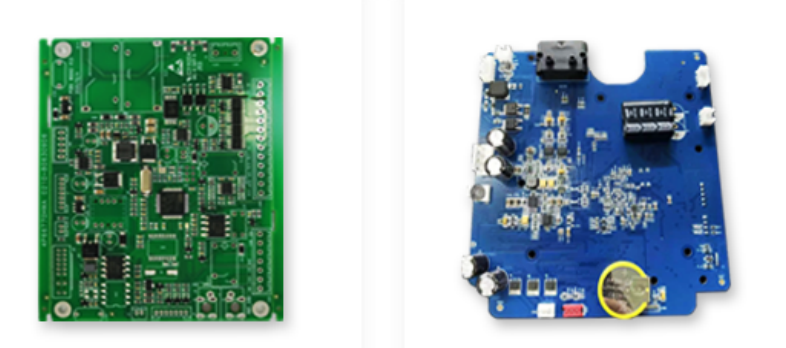
High temperature PCBs are assembled with other electronic components using some elements such as looks, cable, wire harness, molded plastic and metal works. In order to assemble high temperature PCBs with all other components of an electronic device, the following electronic parts and mechanical tools are needed
1. Basic Electronic components.
2. High temperature Printed Circuit Board.
3. Soldering materials such as solder paste, Solder balls for BGA, Solder Wire and Solder Bar.
4. A soldering flux is also needed.
5. Soldering equipment such as soldering station, SMT equipment, Wave soldering machine, testing equipment and wave soldering machine.
After bringing together all these needed components, Materials and equipment, you can simply assembly the High Temperature PCB with the other components by follow the necessary procedures.
The uniqueness of High Temperature PCBs make it applicable in different areas. Some of the areas of application are:
· Communication: High temperature PCBs are used in smartphones, tablets, smart watches and radios.
· Home appliances: They find applications in alarm clock, microwave, refrigerators, DVD players and stereo set
· Power equipment: High Temperature PCBs are used in power inverters, power supplies and power distribution devices.
· Medical devices: They are applied in the manufacture of scanning equipment, heart rate and blood pressure monitors.
· Navigation systems: High Temperature PCBs are used in satellite Navigation systems that are incorporated into vehicles.
Are you thinking of where to source for high quality PCB material for your products? If yes, then you can partner with us for a smooth deal and a seamless transaction.
For more information on the range of products and services we offer, kindly click here to contact us.