Classification according to the number of circuit layers: divided into single-sided, double-sided and multi-layer boards. Common multi-layer boards are generally 4-layer boards or 6-layer boards, and complex multi-layer boards can reach dozens of layers. The PCB board has the following three main types of division:
Single-sided PCB
On the most basic PCB, the parts are concentrated on one side, and the wires are concentrated on the other side (when there are SMD components and the wires are on the same side, the plug-in devices are on the other side). Because the wires only appear on one side, this kind of PCB is called a single panel.
Because single-sided boards have many strict restrictions on the design of the circuit (because there is only one side, the wiring cannot cross and must be around a separate path), so only early circuits use this type of board.
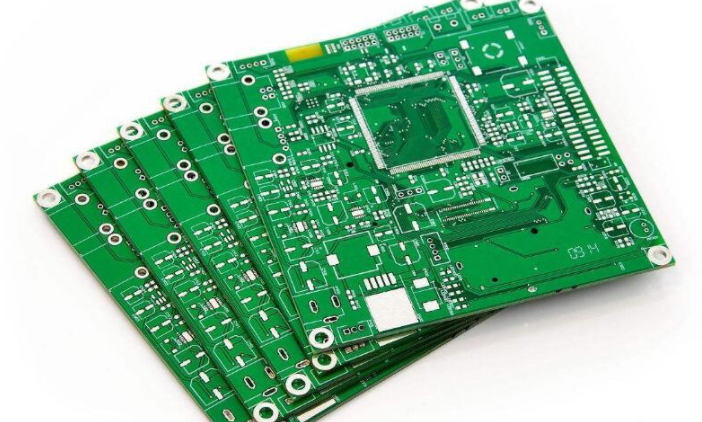
Double-sided PCB
This kind of circuit board has wiring on both sides, but to use wires on both sides, there must be a proper circuit connection between the two sides. The “bridges” between such circuits are called vias. A via is a small hole filled or coated with metal on the PCB, which can be connected with the wires on both sides.
Because the area of the double-sided board is twice as large as that of the single-sided board, the double-sided board solves the difficulty of interlacing wiring in the single-sided board (it can be conducted to the other side through holes), and it is more suitable for use in circuits that are more complicated than the single-sided board.
Multilayer board
In order to increase the area that can be wired, multi-layer boards use more single or double-sided wiring boards. Use one double-sided as the inner layer, two single-sided as the outer layer, or two double-sided as the inner layer and two single-sided as the outer layer of the printed circuit board. The positioning system and the insulating bonding material alternately together and the conductive pattern Printed circuit boards that are interconnected according to design requirements become four-layer and six-layer printed circuit boards, also known as multilayer printed circuit boards.
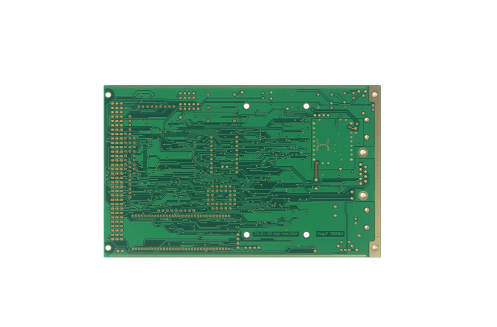
The number of layers of the board does not mean that there are several independent wiring layers. In special cases, empty layers are added to control the thickness of the board. Usually, the number of layers is even and includes the two outermost layers. Most of the motherboards have 4 to 8 layers of structure, but technically, it is possible to achieve nearly 100 layers of PCB boards.
Most large supercomputers use fairly multi-layered motherboards, but because these types of computers can already be replaced by clusters of many ordinary computers, super-multilayered boards have gradually ceased to be used. Because the various layers in the PCB are tightly integrated, it is generally not easy to see the actual number, but if you look closely at the motherboard, you can still see it.