Choosing between an FR-4 PCB board and a Rogers laminate depends on the requirements of the application. FR-4 suits many general PCB designs, while Rogers is designed for applications with more demanding high frequency performance.
This article compares the two materials and explains when a high frequency laminate may be the more suitable choice.
FR-4 is available in several grades, including Standard FR-4, High TG FR-4, and High CTI FR-4. These options address different thermal and electrical requirements, allowing engineers to select a suitable grade for general electronic and multilayer PCB applications.
Rogers also offers different laminate options, including Rogers 4003C and Rogers 4350B. These materials are used for applications such as antennas, power amplifiers, microwave communication, automotive radar, RFID, and satellite equipment, where more demanding high frequency performance is required.
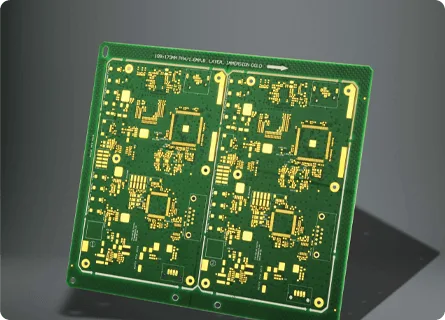
FR-4 provides suitable electrical performance for many conventional PCB designs. Its dielectric characteristics support general digital and electronic circuits, while the specific FR-4 grade can be selected according to the requirements of the application. Engineers can review the available FR-4 PCB options when comparing material grades.
Rogers materials are intended for applications where dielectric performance and signal loss require tighter control. They are particularly relevant to RF and microwave circuits, where the PCB material has a greater influence on signal transmission. Available Rogers PCB materials include options for these applications.
FR-4 covers a broad range of applications, including general electronics, industrial equipment, and multilayer PCB designs. Its different material grades make it possible to address specific thermal or electrical requirements without moving to a specialized high frequency laminate.
Rogers materials are more closely associated with RF, microwave, communication, radar, and other high frequency applications. The choice depends on the circuit’s operating conditions, signal requirements, and required electrical performance.
| Key Factor | FR-4 PCB Board | Rogers PCB |
| Main application | General electronics and digital circuits | RF, microwave, and high frequency circuits |
| Dielectric loss | Suitable for moderate loss requirements | Better suited to low loss requirements |
| Impedance stability | Suitable for standard controlled impedance designs | Better suited to demanding RF impedance requirements |
| Material cost | Generally lower | Generally higher |
The key distinction is application requirement rather than material superiority. FR-4 provides multiple grades for general PCB designs, while Rogers offers laminate options for circuits with more demanding high frequency requirements.
FR-4 is suitable for a broad range of electronic applications where the PCB material does not need to meet particularly demanding RF characteristics. Digital control boards, industrial electronics, and many general purpose electronic products can use FR-4 when their electrical requirements remain within the material’s capabilities.
For these applications, using a specialized laminate may add material cost without providing a meaningful benefit to the finished circuit.
As operating frequency increases, the electrical properties of the PCB material have a greater influence on signal transmission. Trace geometry, dielectric thickness, and material characteristics all affect the behavior of high frequency signals.
For designs with more demanding frequency requirements, high frequency PCB solutions can provide suitable material options for RF and other high frequency applications. However, there is no single frequency value that automatically determines whether FR-4 or Rogers should be selected.
Dielectric constant affects signal propagation and transmission line design, while dissipation factor is related to signal loss. These characteristics become increasingly important when signals operate at higher frequencies or travel through longer transmission paths.
FR-4 can provide suitable dielectric performance for many conventional PCB designs. Rogers materials become more relevant when a design requires tighter control of dielectric characteristics and lower signal loss.
Impedance depends on several factors, including trace width, copper thickness, dielectric thickness, layer arrangement, and dielectric properties. The selected laminate is therefore only one part of the impedance design.
A 50 ohm transmission line, for example, cannot be achieved by specifying the laminate alone. The complete stackup and trace geometry need to be calculated together, particularly when changing from FR-4 to another material system.
FR-4 is generally appropriate when the circuit does not require specialized high frequency electrical characteristics. Its broad availability and range of material grades make it practical for many commercial and industrial PCB applications.
It can also be suitable when material cost, mechanical strength, and established production processes are important purchasing considerations.
Rogers becomes more relevant when the circuit requires tighter control of dielectric characteristics, signal loss, or high frequency performance.
The material is particularly appropriate when RF or microwave signals travel through transmission lines where the PCB material has a greater influence on attenuation and impedance.
Material selection should not be separated from the rest of the PCB design. Engineers should review operating frequency, signal path length, impedance target, dielectric thickness, copper thickness, layer structure, and environmental conditions together.
This approach helps determine whether conventional FR-4 is sufficient or whether a high frequency laminate is justified by the actual circuit requirements.

The selected laminate needs to be incorporated into the complete PCB stackup. Changes in dielectric thickness, material characteristics, copper thickness, and layer arrangement can affect the final electrical performance.
For multilayer or RF designs, the stackup should therefore be reviewed before fabrication rather than treated as a standard production parameter.
Impedance requirements should be considered during engineering and fabrication. The manufacturer needs the required impedance target together with the relevant stackup information so that trace geometry can be calculated and verified.
This becomes particularly important when a design moves from FR-4 to Rogers because the material change can affect the required transmission line dimensions.
A supplier should be able to manufacture the selected laminate and specified board structure consistently. VictoryPCB’s published manufacturing capabilities include FR-4 from normal to High TG, High CTI FR-4, Polyimide, Aluminum Base, and Rogers, with PCB production from 1 to 16 layers.
For procurement teams, material availability, stackup control, impedance verification, and process consistency are important factors to confirm before production.
FR-4 can be used for some higher frequency applications, depending on the electrical requirements of the design. There is no universal frequency point at which every FR-4 board must be replaced. Dielectric performance, signal loss, impedance requirements, and the complete transmission path should be evaluated together.
Rogers is generally considered when a circuit requires tighter control of dielectric characteristics and signal loss. It is particularly relevant to RF and microwave applications where PCB material properties have a greater influence on signal transmission.
The layout should be reviewed when changing laminate materials. Because dielectric properties affect transmission line behavior, trace width and other stackup parameters may need to be recalculated to maintain the required impedance.
FR-4 suits many general PCB applications, while Rogers is more relevant when RF or microwave circuits require tighter control of dielectric performance and signal loss.
The choice should be based on the actual frequency, impedance, signal loss, stackup, and manufacturing requirements rather than a fixed frequency threshold.
For a custom material and stackup evaluation, contact the PCB team with your PCB specifications and application requirements.