Modern electronics are built on a foundation of intricate components, two of the most essential being Integrated Circuits (ICs) and Printed Circuit Boards (PCBs). While they often work in tandem, they serve very different purposes. This comprehensive guide delves into what ICs and PCBs are, how they differ, and why understanding their relationship is key to grasping modern technology.
An Integrated Circuit, commonly called a microchip, is a tiny electronic circuit that integrates multiple electronic components onto a single silicon wafer. These components include transistors, diodes, capacitors, and resistors, all working together to perform a specific function.
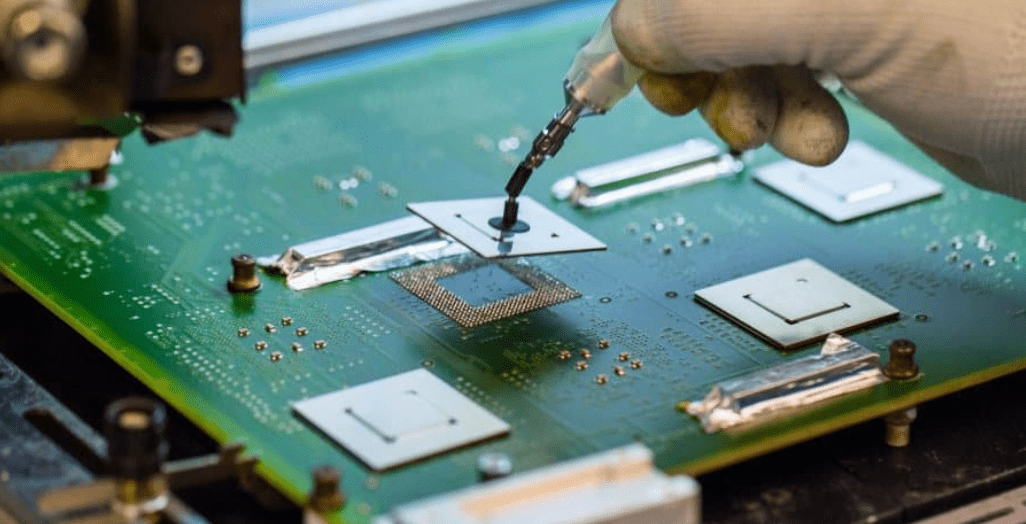
Integrated Circuits can be categorized based on construction and functionality: Analog ICs handle continuous signals like audio; Digital ICs process binary data; Mixed-Signal ICs combine analog and digital functions; ASICs are customized for specific applications; and System-on-Chip (SoC) integrates multiple functions onto a single chip, offering versatile performance.
Size: ICs are incredibly small, often just a few millimeters wide, yet they pack millions—or even billions—of components.
Functionality: Each IC is designed for a specific task, such as processing, memory storage, or amplification.
Efficiency: ICs are highly efficient, consuming minimal power while providing robust functionality.
Applications: Commonly found in CPUs, GPUs, memory chips, and signal processors.
Advantages: Miniaturization, reliability, low manufacturing costs, and high-speed operation.
Before ICs, electronic circuits relied on bulky individual components connected manually. ICs replaced these setups, enabling the creation of compact, lightweight devices like smartphones, laptops, and wearables.
A Printed Circuit Board is a flat board made of insulating material, such as fiberglass, with conductive pathways etched onto its surface. These pathways connect various electronic components, including ICs, resistors, capacitors, and connectors.
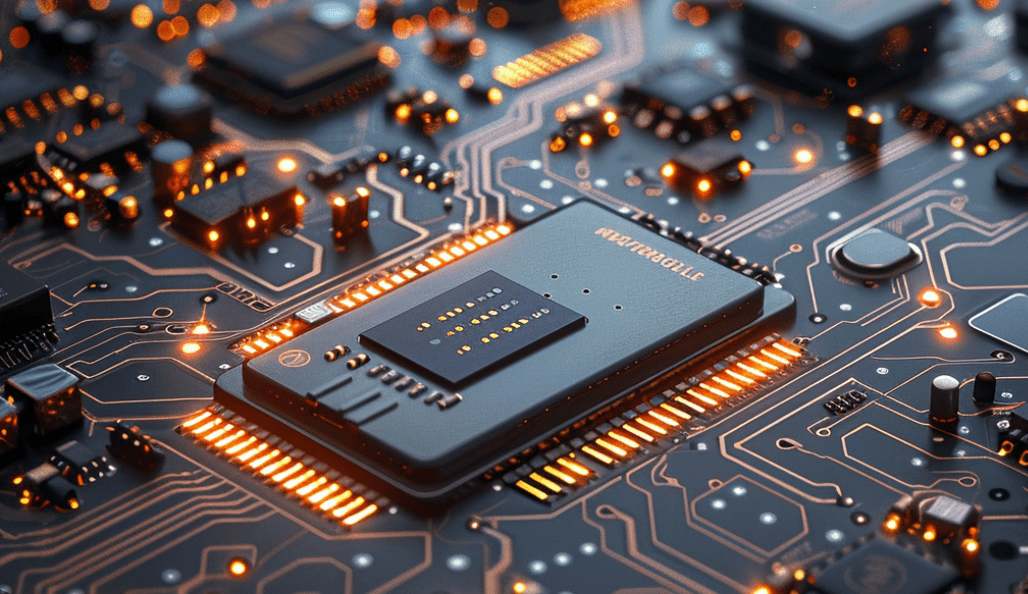
Structure: Made up of layers, including Substrate, Copper Traces, Solder Mask and Silkscreen.
Purpose: Provides mechanical support and electrical connections for components.
Applications: Used in consumer electronics, industrial equipment, and medical devices.
Advantages: High reliability, ease of manufacturing, and the ability to integrate complex circuits.
Printed Circuit Boards (PCBs) come in various types, each designed for specific applications and operating conditions.
Single-Sided PCBs
Double-Sided PCBs
Multilayer PCBs
Flexible PCBs
Rigid-Flex PCBs
High-Frequency PCBs
High-Density Interconnect (HDI) PCBs
Further Reading: How Many Types of PCB Boards Are There?
ICs and PCBs are closely related but fundamentally different. Here’s a detailed comparison:
| Feature | Integrated Circuit (IC) | Printed Circuit Board (PCB) |
|---|---|---|
| Definition | A miniaturized electronic circuit | A board that connects and supports components |
| Function | Performs a specific task | Provides connectivity for components |
| Components | Transistors, resistors, capacitors | ICs, connectors, resistors, capacitors |
| Size | Extremely small | Larger than ICs |
| Complexity | Highly complex | Can range from simple to highly complex |
| Manufacturing | Semiconductor fabrication | PCB design and assembly |
| Applications | CPUs, memory, amplifiers | Smartphones, industrial equipment |
| Cost | Low due to mass production | Depends on size, complexity, and layers |
An Integrated Circuit performs specific tasks, such as processing data or amplifying signals, whereas a Printed Circuit Board serves as a platform that physically supports and electrically connects multiple components, including ICs.
ICs are extremely compact, often just a few millimeters in size, while PCBs are larger, with dimensions that depend on the device’s requirements and complexity.
ICs are highly complex, containing millions of microscopic components on a single chip. In contrast, PCBs can range from simple single-layer boards to intricate multilayer designs incorporating various components.
ICs are created using advanced semiconductor fabrication processes, involving photolithography and doping. PCBs are manufactured using etching, lamination, and soldering processes to create conductive pathways on insulating layers.
ICs are commonly used in processors, memory modules, and signal amplifiers, focusing on specific tasks. PCBs are essential in all electronic devices, providing connectivity for ICs and other components, from consumer gadgets to industrial machines.
ICs are cost-effective due to mass production, especially for standardized designs. PCB costs vary widely, depending on size, layer count, and complexity, but they are generally more expensive than ICs in terms of manufacturing and material costs.
ICs and PCBs are complementary components that enable modern electronics to function effectively. While ICs handle specific tasks, PCBs provide the physical platform for ICs and other components to interact.
Integration Process
Mounting: ICs are placed onto PCBs through surface-mount technology (SMT) or through-hole technology.
Connectivity: Copper traces on the PCB connect the IC to other components, such as power supplies, sensors, and outputs.
Protection: PCBs often include protective coatings to shield ICs and components from environmental factors.
Integrated Circuits and Printed Circuit Boards are essential in the world of electronics. ICs perform specific tasks like processing and memory storage, while PCBs provide the connectivity and structure to bring entire systems together. Understanding their differences and synergy is key to grasping how modern devices function.
Looking for custom PCBs or IC solutions? Contact us today by [email protected] to see how we can support your next project with state-of-the-art technology.
Q: 1. Are ICs and PCBs Interchangeable?
A: No, they serve entirely different purposes. ICs are single components with specific functions, while PCBs are platforms that bring multiple components together.
Q: 2. Can a Device Function Without a PCB?
A: Some simple circuits may not require a PCB, but for complex devices, PCBs are essential for connectivity and reliability.
Q: 3. Are ICs Always Used in PCBs?
A: Most modern PCBs incorporate ICs, but simpler PCBs, such as those in basic toys or LED arrays, might not include them.
Q: 4. What’s the differences between PCB and IC design?
A: The key difference between IC and PCB design lies in complexity, process, and expertise. IC design creates custom circuits on semiconductor wafers, integrating millions of components like transistors and capacitors into a tiny chip, requiring advanced tools, materials, and physics knowledge. PCB design, by contrast, assembles pre-made components on a board to create connections, making it simpler, cheaper, and less specialized.
Q: 5. How to remove ic from pcb?
A: To remove ICs from a PCB, use a hot air gun to heat the leads evenly until the solder melts, then lift the IC with tweezers. Alternatively, a solder pot can melt solder for quick removal, or desoldering braid/pumps can clear joints for through-hole ICs. Practice on scrap boards to avoid damage to components or the PCB.