Modern electronics demand materials that can handle high performance, durability, and reliability, especially in challenging environments. Arlon PCB materials stand out as a leading choice for industries requiring superior thermal, electrical, and mechanical properties. This article explores Arlon PCBs, their features, types, applications, and advantages, guiding you to make informed decisions for your next project.
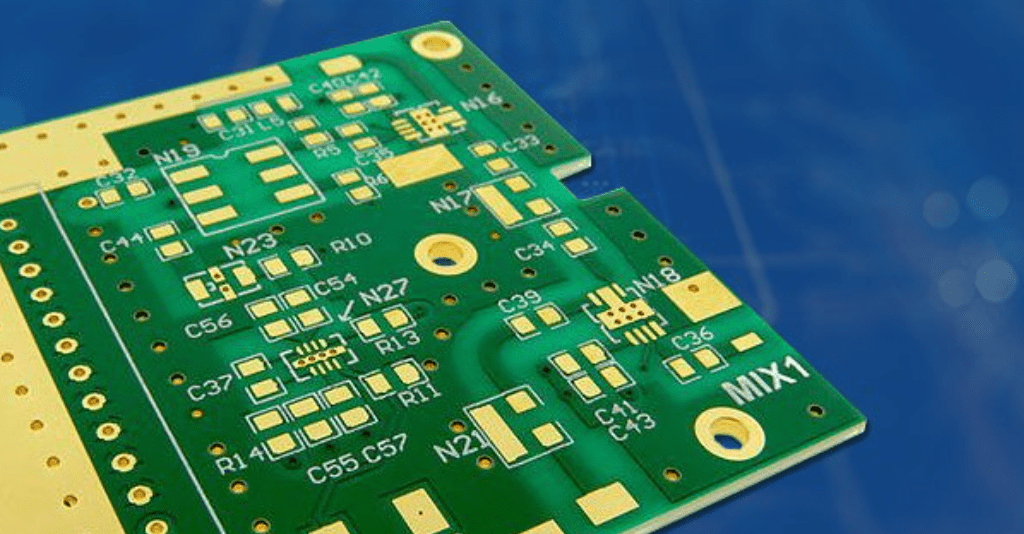
Arlon PCBs are circuit boards manufactured using laminates and prepregs developed by Arlon, a renowned name in high-performance PCB materials. Arlon specializes in creating advanced thermoset resin systems, polyimides, and high-frequency laminates that cater to demanding applications like aerospace, telecommunications, and medical equipment.
With decades of expertise, Arlon has built a reputation for innovation and quality, providing materials that meet stringent industry standards while excelling in harsh environments.
Arlon PCBs are known for their high-performance materials, starting with Polyimide Products, which offer exceptional thermal stability and mechanical strength, making them ideal for aerospace, military, and high-temperature applications. These laminates ensure reliable performance in the most demanding environments.
| Resin | Description | Tg (°C) | Z Axis Expansion (%) | UL-94 Rating | Td 5% (°C) | H₂O Absorp (%) | Tc (W/m-K) | IPC4101 Class | Comments |
|---|---|---|---|---|---|---|---|---|---|
| 33N | Flame Retardant Polyimide | 250 | 1.2 | V0 | 389 | 0.21 | 0.20 | GIL/40/41 | Max Flame Retardance |
| 35N | Flame Retardant Polyimide | 250 | 1.2 | V1 | 407 | 0.26 | 0.20 | GIL/40/41 | Reduced Cure Time |
| HF-50 | Powdered Poly Hole Fill Compound | 250 | 0.55 | N/A | >400 | 0.40 | 0.50 | N/A | Hole/Via Fill Compound |
| 84N | Filled Polyimide Prepreg | 250 | 1.0 | Meets HB | 407 | 0.30 | 0.25 | GIL/40/41 | Filling Heavy Copper |
| 85N | High Temp Polyimide | 250 | 1.2 | HB | 407 | 0.27 | 0.20 | GIL/40/41 | Optimum Long Term Stability |
| 85HP | High Performance Polyimide | >250 | ≤1.0 | Meets HB | 430 | 0.19 | 0.50 | GIL/40/41/43 | Tc (W/mK) is 2x Polyimide |
| 84HP | Filled Polyimide Prepreg | >250 | ≤1.0 | Meets HB | 430 | 0.19 | 0.50 | GIL/40/41/43 | Fills Thick Copper Layers |
| 86HP | High Performance Polyimide | >250 | ≤1.0 | V0 | 430 | 0.12 | 0.60 | GIL/40/41 | High Tc for Performance |
Arlon’s Low Flow Products are specialized prepregs designed for applications requiring minimal resin flow during lamination. They provide excellent bonding and dimensional stability, making them ideal for complex multilayer PCBs and rigid-flex designs where precise material control is critical.
| Resin | Description | Tg (°C) | Z Axis Expansion (%) | UL-94 Rating | Td 5% (°C) | H₂O Absorp (%) | Tc (W/m-K) | IPC4101 Class | Comments |
|---|---|---|---|---|---|---|---|---|---|
| 37N | Low Flow Polyimide Prepreg | 200 | 2.3 | Meets V0 | 340 | <1.00 | 0.30 | GIJ/42 | Rigid Flex Applications |
| 38N | 2nd Gen Low Flow Polyimide Prepreg | 200 | 1.5 | Meets V0 | 330 | <1.00 | 0.30 | GIJ/42 | Enhanced Rheology Rigid Flex |
| 47N | Modified Epoxy Low Flow | 135 | 3.5 | V0 | 315 | 0.10 | 0.25 | GFG/21 | Heat Sink Bond, Low Temp Cure |
| 49N | Multifunctional Epoxy Low Flow Lead | 170 | 3.1 | V0 | 303 | 0.10 | 0.25 | GFG/26 | Rigid-Flex, Heat Sinks |
| 51N | Lead-Free Epoxy Low Flow | 170 | 2.6 | V0 | 368 | 0.15 | 0.25 | GFG/126 | Lead-Free Solderable, Rigid-Flex |
Arlon’s Epoxy Products are versatile, cost-effective materials offering good thermal and mechanical properties. They are widely used in general-purpose PCBs, consumer electronics, and industrial applications, providing reliable performance across various environments.
| Resin | Description | Tg (°C) | Z Axis Expansion (%) | UL-94 Rating | Td 5% (°C) | H₂O Absorp (%) | Tc (W/m-K) | IPC4101 Class | Comments |
|---|---|---|---|---|---|---|---|---|---|
| 44N | Filled Epoxy Prepreg | 170 | 2.2 | V0 | >300 | 0.10 | 0.30 | GFG/98 | For Via/Clearance Hole Fill |
| 45N | Multifunctional Epoxy | 175 | 2.4 | V0 | >300 | 0.10 | 0.25 | GFG/26 | High Layer Count MLBs |
Arlon’s Controlled Thermal Expansion/SMT Products are engineered to provide precise thermal stability and minimize expansion, making them ideal for Surface Mount Technology (SMT) and advanced electronics. These materials ensure reliable performance in applications requiring tight dimensional tolerances.
| Resin | Description | Tg (°C) | Z Axis Expansion (%) | UL-94 Rating | Td 5% (°C) | H₂O Absorp (%) | Tc (W/m-K) | IPC4101 Class | Comments |
|---|---|---|---|---|---|---|---|---|---|
| 45NK | Woven Aramid Reinforced Epoxy | 170 | 2.8 | V0 | >300 | 0.80 | 0.22 | AFN/50 | Kevlar® X-Y CTE of 5-7 ppm/°C |
| 55NT | Epoxy Nonwoven Aramid | 170 | 3.5 | V0 | 368 | 0.30 | 0.20 | BFG/55 | X-Y CTE of 6-9 ppm/°C |
| 85NT | Polyimide Nonwoven Aramid | 250 | 2.3 | Meets HB | 426 | 0.60 | 0.20 | BIL/53 | X-Y CTE of 7-9 ppm/°C |
Arlon PCB materials are renowned for their advanced properties, tailored to meet the demands of various high-performance applications. While each material category (Polyimide, Low Flow, Epoxy, and SMT) has unique characteristics, all Arlon products share the following core features:
Arlon materials exhibit high glass transition temperatures, meaning they maintain stability and reliability in extreme thermal environments. Tg refers to the temperature at which materials transition from a rigid, glassy state to a softer, rubbery state, ensuring durability under high heat. For example, Arlon Polyimide materials like 85N excel in aerospace and military applications requiring consistent performance under heat stress.
All Arlon PCB materials feature low-loss dielectric properties, minimizing energy dissipation during high-frequency operations. This is particularly beneficial for RF and microwave applications, where materials like Arlon 25N offer exceptional signal integrity.
Arlon products are engineered to withstand extreme temperatures, making them ideal for applications in automotive electronics, industrial systems, and power electronics. Epoxy-based materials like 44N are commonly used for heat sink bonding and high-temperature environments.
Arlon laminates and prepregs provide excellent mechanical stability, reducing warping and ensuring reliable operation in harsh conditions. This is especially critical for multilayer PCBs in telecommunications and industrial machinery.
Arlon materials have low moisture absorption rates, ensuring reliability in humid environments or under exposure to harsh conditions. For example, Low Flow products like 38N are used in rigid-flex PCBs, where environmental stability is crucial.
From Polyimide and Epoxy to Controlled Thermal Expansion materials, Arlon offers a wide variety of options tailored to specific needs. Polyimides are suited for high-temperature and high-performance scenarios, while Epoxy materials offer cost-effective solutions for general-purpose PCBs.
When selecting PCB materials, understanding the advantages of Arlon products compared to other commonly used options is critical. Arlon materials are uniquely positioned to outperform standard materials like FR-4 and PTFE in specialized applications.
Designing an Arlon PCB largely follows the same process as standard PCB designs but requires careful selection of materials to leverage the unique properties of Arlon laminates and prepregs. The stack-up configuration, schematic layout, and overall functionality can remain similar, but substituting standard materials like FR-4 with Arlon materials ensures enhanced performance. Utilizing advanced PCB design software is essential to incorporate material-specific properties, optimize the layout, and ensure the design meets the required specifications for applications like high-frequency, high-temperature, or rigid-flex circuits. This approach guarantees that the final prototype aligns with both performance and durability expectations.
Manufacturing an Arlon PCB follows the same general process as standard PCB production, including design validation, prototyping, and high-volume manufacturing. The key difference lies in sourcing materials directly from Arlon LLC to meet your performance requirements. It is vital to specify Arlon laminates and prepregs in your Bill of Materials (BOM) and communicate this clearly to your contract manufacturer to ensure the desired results in the final product.
Arlon PCB materials are a top choice for industries requiring high-performance, reliable, and durable PCBs. Their unique properties, wide range of options, and compliance with global standards make them an excellent choice for advanced applications. Whether for aerospace, telecommunications, or industrial systems, Arlon PCBs deliver unmatched quality and performance.
Ready to start your project? VictoryPCB specializes in manufacturing high-quality PCBs. Contact us today by [email protected] to discuss your requirements and experience unmatched precision and reliability.
Q: 1. What are Arlon PCB materials?
A: Arlon PCB materials are high-performance laminates and prepregs designed for demanding applications in industries like aerospace, telecommunications, and medical devices.
Q: 2. Are Arlon materials environmentally friendly?
A: Yes, Arlon materials comply with standards like RoHS and UL, ensuring eco-friendliness.
Q: 3. Why are Arlon PCBs popular in high-frequency applications?
A: Their low dielectric constant and loss factors ensure minimal signal loss, making them ideal for RF and microwave systems.
Q: 4. How do I choose the right Arlon material for my PCB?
A: Assess your project’s thermal, electrical, and mechanical requirements and consult with a trusted pcb manufacturer.
Q: 5. Can Arlon materials handle extreme temperatures?
A: Yes, Arlon’s polyimide and thermoset materials are designed for high-temperature environments.