In the fast-evolving world of electronics, understanding the distinction between PCBs and PCBAs is not just technical trivia—it’s essential knowledge for engineers, procurement managers, and even startup founders. Though these two terms are often used interchangeably, they represent very different stages in the lifecycle of an electronic product. The clarity between what constitutes a PCB and a PCBA can help companies make smarter sourcing decisions, control costs, and achieve better performance outcomes. More importantly, it can illuminate why precision in manufacturing is a non-negotiable factor in today’s electronics ecosystem.
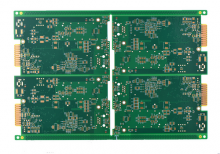
A PCB (Printed Circuit Board) is the backbone of most electronic devices. It is a flat board typically made from fiberglass-reinforced epoxy resin (like FR4) with conductive pathways etched into copper sheets. These pathways connect various components electrically, replacing bulky and unreliable point-to-point wiring of earlier generations.
PCB types vary depending on complexity and use cases. For example:
| Type of PCB | Description | Applications |
|---|---|---|
| Single-sided PCB | One layer of copper, less complex | Simple consumer electronics (e.g., calculators) |
| Double-sided PCB | Copper on both sides, more complex | Power supplies, lighting systems, some automotive |
| Multilayer PCB | Multiple layers for compact circuits | High-end electronics (e.g., smartphones, servers) |
| Flexible PCB | Made from flexible materials, bends with the device | Wearables, foldable phones, medical devices |
What makes PCBs vital is their ability to offer structured, compact, and reliable circuitry. However, a PCB alone is just the platform—it doesn’t do anything functional until components are mounted on it.

This is where PCBA (Printed Circuit Board Assembly) enters the picture. A PCBA refers to a PCB that has undergone component placement and soldering, transforming it into a functioning unit within an electronic product.
| PCBA Process Step | Description | Key Equipment Used |
|---|---|---|
| Solder Paste Printing | Apply paste to the board for component attachment | Automated solder paste printers |
| Pick and Place | Place surface-mount components onto the PCB | Robotic arms, pick-and-place machines |
| Reflow Soldering | Melt solder paste to attach components | Reflow ovens |
| Inspection and Testing | Visual and functional testing of the assembly | AOI, X-ray inspection |
The PCBA process is much more intricate than simply attaching parts. It involves:
Solder paste printing: Applying solder paste to precise pads on the PCB.
Pick and place: Placing surface-mount components onto the board using high-speed robotic arms.
Reflow soldering: Melting the solder paste to permanently bond the components.
Inspection and testing: Using AOI (Automated Optical Inspection), X-ray analysis, and functional tests to ensure quality.
To provide a clearer understanding, the table below summarizes the core differences between PCB and PCBA:
| Feature | PCB | PCBA |
|---|---|---|
| Definition | Bare printed circuit board | PCB with mounted components |
| Functionality | Non-functional on its own | Fully functional as a circuit |
| Components | No components | Contains ICs, capacitors, resistors, etc. |
| Manufacturing Process | Etching, layering, drilling | Pick & place, soldering, inspection |
| Applications | Prototyping, initial design | Ready-to-use in end products |
This distinction is not merely academic. Depending on the scope of a project, a buyer may only need the bare board for in-house assembly—or prefer to source completed PCBAs to streamline production and reduce labor costs.
In practical terms, the decision between purchasing PCBs or PCBAs can influence budget planning, lead times, quality assurance processes, and supply chain strategy. For instance, a company that specializes in prototyping may only require PCBs because they handle assembly internally. In contrast, an IoT startup with limited in-house technical capabilities may benefit from ordering fully assembled PCBAs, avoiding the complexity of sourcing components and managing SMT assembly.
Regardless of whether a customer orders a PCB or a PCBA, precision is a fundamental requirement. In both stages, even minor deviations can result in cascading failures—from signal interference and power leakage to total circuit malfunction.
For PCBs, precision ensures:
Accurate layer alignment in multilayer boards
Proper copper thickness for reliable conductivity
Clean via holes and drilled features for interconnections
For PCBAs, precision affects:
Component placement accuracy (even a 0.1 mm shift can cause problems)
Solder joint integrity
Thermal profile optimization during reflow soldering
| Quality Control Element | Impact on PCB | Impact on PCBA |
|---|---|---|
| Layer Alignment | Critical for multi-layer boards | Ensures electrical connections in complex assemblies |
| Component Placement | Not applicable | Crucial for functionality and reliability |
| Soldering Accuracy | Not applicable | Ensures strong, reliable connections |
The choice often depends on your company’s capabilities, project scale, and required lead time. Here are some guiding points:
| Scenario | Choose PCB | Choose PCBA |
|---|---|---|
| Early design/prototyping | When you’re still testing and iterating designs | If you need final assemblies for early production runs |
| In-house assembly | If you have a capable assembly team | If you need to minimize assembly time and costs |
| Fast product launch | If you have an established assembly line | If you want a complete, ready-to-deploy product |
Some businesses opt for a hybrid approach: sourcing PCBs from one supplier and sending them to another for assembly. However, this introduces potential inconsistencies and logistical challenges. Choosing a single, integrated supplier often provides better results.
What sets certain manufacturers apart is not just their technical capacity, but how they integrate processes from PCB fabrication to PCBA assembly under one roof. This vertically integrated model allows for:
Streamlined quality control across stages
Faster turnaround times
Better traceability of materials
Reduced communication gaps between fabrication and assembly teams
Additionally, innovative use of design-for-manufacturing (DFM) consultation helps prevent costly rework. Experienced suppliers review Gerber files, BOMs, and pick-and-place data before production to spot and resolve potential issues in layout, footprint compatibility, or thermal behavior.
Understanding the difference between PCBs and PCBAs goes far beyond terminology—it directly affects how electronic products are designed, manufactured, and deployed. While PCBs provide the essential infrastructure, PCBAs bring those structures to life by integrating the necessary components. Precision in both stages is not just a technical goal, but a commercial imperative.
For businesses seeking excellence in electronics manufacturing, choosing the right partner is just as important as choosing the right materials or processes. Victory, as a professional PCB manufacturer with extensive experience in multilayer boards, quick-turn prototyping, and customized solutions, ensures the precision, consistency, and reliability that global clients depend on. Whether you’re developing cutting-edge tech or optimizing production lines, Victory delivers the quality that makes a difference.