Have you ever looked at a printed circuit board and wondered what are those tiny pieces on it?
The small green chips, the copper lines, the circuits… Are they just a design?
No, they are not. These components are needed for the PCB to function, and the manufacturing process that involves the mounting of those components on the board is known as PCB assembly.
I’m sure you should be able to easily recognize a standard printed circuit board when you see it in an electronic device. However, do you know the processes involved in PCB assembly?
If you’re skeptical about your knowledge of PCB assembly, then this article is for you. Stay focused as we walk you through the processes involved in PCB assembly.
The first step involved in PCB assembly is to apply a solder paste to the Printed circuit board upon which no component has been mounted.
This process is known as ‘Solder paste stenciling’. A stencil made from stainless steel is placed on the board before applying the paste. This is to ensure that the solder paste is applied to only the relevant parts of the board.
After the solder paste has been evenly applied to the board, the next step is to transfer the board to the pick and place machine.
The machine functions by placing surface mount components on the printed circuit boards. The components make contact with the solder paste and the board and adhere to the board.
The components that have been mounted on the board need to stay in place and adhere firmly to the board. This is accomplished through a process known as “reflow soldering”.
In this process, the board containing the mounted components is passed through a reflow oven with the help of a conveyor belt.
The reflow oven contains heaters with a temperature high enough to melt the solder paste. After melting the solder paste, the PCB is passed through a series of coolers which enable the solder paste to cool and solidify.
The cooling of the solder paste is controlled such that the solidified paste makes a permanent adherence between the board and the mounted components.
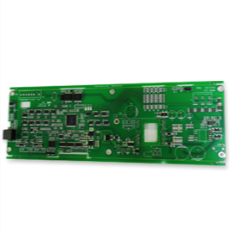
PCB assembly doesn’t end in reflow soldering, there is a need to check for the quality of the printed circuit board by inspecting the mounted components.
In this process, the mounted components are checked to ensure that they are not misplaced. This is important because a misplaced component can cause a short circuit in the PCB.
The inspection of the assembled PCB can be done manually, automatically, or by x-ray inspection.
In addition to the mounted components, some PCBs contain plated through-hole components (PTH components).
PTH components are holes that are plated in a controlled manner throughout the board. The holes are used by PCBs to pass signals from one side of the board to the other.
This is the final step in PCB assembly. It determines the fate of the assembled PCB whether it will be fit for use, recycled, or discarded.
Certain characteristics of the board such as voltage, current, and signal output are tested to determine any fluctuation. If the signal shows peaks beyond a predetermined range, then the PCB fails the functionality Test.
Such PCB will either be recycled to undergo another PCB assembly process or be discarded.
Whether you need an assembled PCB or you want a PCB assembly that suits your need, we got you covered!
Being a reputable and experienced manufacturer of PCBs, you are assured of getting a high-quality product from us. Check out our products.