Amplifier PCBs, or printed circuit boards, are essential in electronics that require signal amplification. From audio systems to medical devices and RF applications, these boards form the heart of amplifiers by hosting components that amplify weak signals into powerful outputs. In this article, we’ll explore the design, characteristics, and applications of amplifier PCBs, as well as the differences from standard PCBs and best practices for building efficient amplifier boards.
An amplifier PCB is a specialized circuit board designed to increase the amplitude of an input signal. These boards are fundamental to the performance of an amplifier, housing key components like transistors, capacitors, resistors, and sometimes integrated circuits (ICs) that enable signal enhancement. The layout and materials used in amplifier PCBs must support high signal integrity and thermal management, as these boards often handle high power and are sensitive to noise and interference.
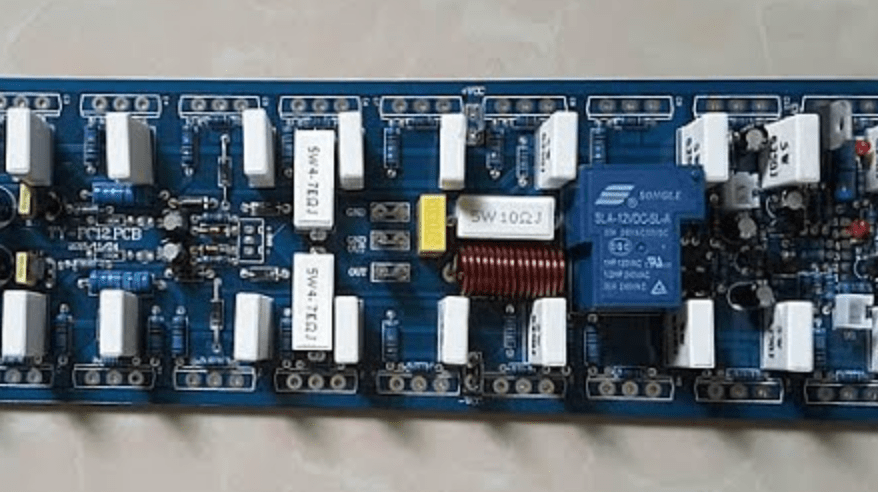
The effectiveness of an amplifier PCB depends on its components and their layout:
The choice and arrangement of these components influence the amplifier PCB’s gain, bandwidth, noise immunity, and overall stability.
Amplifier PCBs possess unique characteristics that support high-performance amplification:
These characteristics help maintain signal clarity, stability, and efficiency, even in demanding applications.
Different types of amplifiers serve various functions, from enhancing audio signals to amplifying radio frequencies (RF) for wireless communication. Each type has specific PCB design needs:
For audio devices, the PCB layout must minimize noise and distortion to maintain sound quality. Audio amplifiers are common in speaker systems, where they amplify low-power audio signals to drive speakers. The PCB design emphasizes grounding and trace separation to avoid signal degradation.
Used in applications needing high output power, such as broadcasting or industrial machinery, power amplifiers require PCBs capable of handling significant currents and dissipating heat efficiently. These designs often feature thick copper layers, wide traces, and large capacitors to manage the increased power flow.
Operating at high frequencies, RF amplifiers amplify signals for devices like radios and cell towers. These PCBs require precise impedance matching, short trace lengths, and meticulous grounding to ensure signal clarity. RF amplifier designs often integrate shielding to isolate the signal from external interference.
Each amplifier type’s requirements are influenced by the operating environment, signal frequency, and power levels, making careful design crucial for optimal performance.
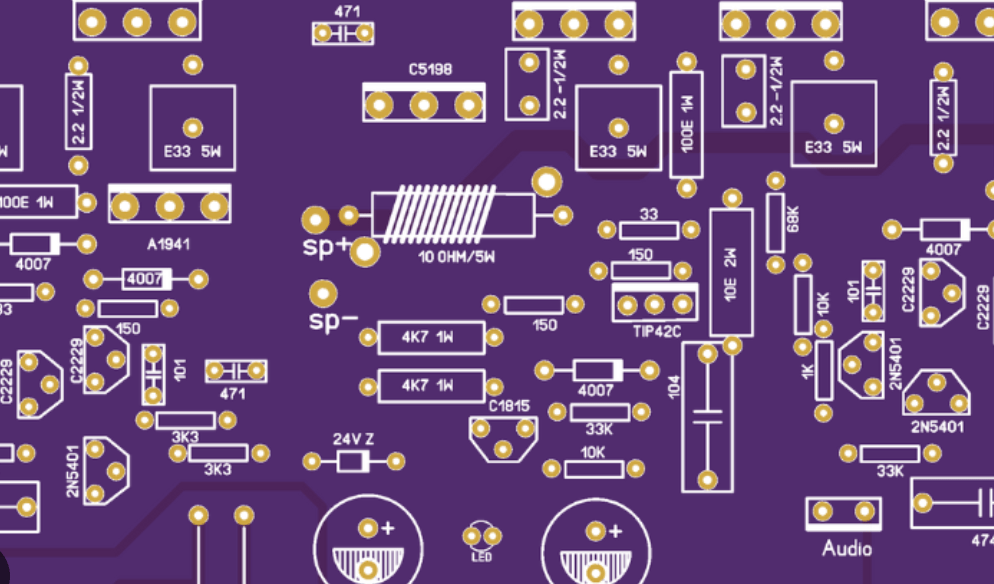
Amplifier PCBs are used across a variety of fields, each leveraging their ability to enhance signal strength:
These applications demonstrate the versatility of amplifier PCBs, from boosting audio signals to enhancing medical diagnostics.
While standard PCBs share basic design principles with amplifier PCBs, there are notable differences:
These differences underscore the specialized design requirements for amplifier PCBs to ensure efficient, high-quality amplification.
Creating an efficient amplifier PCB involves both meticulous design steps and strategic layout practices to ensure optimal performance. Each step in the design process, from schematic creation to component placement, directly impacts signal integrity, power handling, and thermal management. Here’s a combined guide that integrates design and layout best practices.
Begin by developing a comprehensive schematic tailored to your amplifier’s requirements. This schematic should include voltage and current calculations for each component, especially for high-power amplifiers where heat and power handling are critical. Choosing the amplifier class (Class A, B, AB, or D) early in the design process is essential, as it affects power efficiency, distortion levels, and layout complexity.
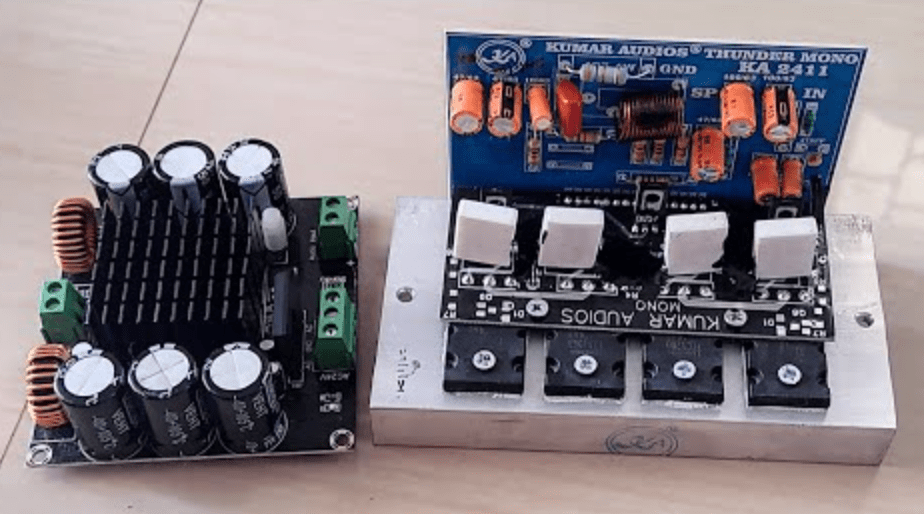
Selecting high-quality components like high-tolerance capacitors and precision resistors is key to stable performance. To optimize signal flow, place components to minimize trace lengths, reducing resistance and noise. Separate high-current paths from sensitive signal lines to prevent interference. Position heat-generating parts, such as transistors, near heat sinks or areas with good airflow to ensure efficient thermal management.
A strong grounding strategy is essential for noise-free performance. Using a dedicated ground plane in multi-layer PCBs offers a low-impedance path, reducing noise and interference. Separating ground paths for power and signal further minimizes interference risks, which is especially important in audio amplifiers where even minor noise can impact sound quality.
A stable power supply is critical for amplifier performance. Decoupling capacitors placed near power pins smooth voltage spikes, protecting sensitive components from fluctuations. Adding a voltage regulator ensures consistent power delivery, especially important in audio applications to prevent ripple effects that could degrade sound quality.
Effective thermal management is essential for high-power amplifier PCBs. Heat sinks positioned on high-power components and thermal vias under them help dissipate heat from the PCB surface. Copper pours further assist by increasing heat dissipation. Additionally, arranging components to allow airflow within the enclosure or using heat shields protects sensitive parts from thermal buildup.
Effective signal tracing is vital for maintaining signal integrity and reducing interference. High-power lines should use wide traces to handle larger currents, while narrower traces for signal lines help minimize capacitance. In RF applications, precise impedance matching along traces is essential to prevent signal reflections and loss, ensuring clear, stable signals at high frequencies.
High-frequency amplifiers are sensitive to EMI, which can distort signals and cause interference. To minimize this, use smooth 45-degree angles in traces to reduce reflection and noise. Additionally, in RF applications, apply shielding around high-frequency components to protect them from external interference and prevent cross-talk with other PCB parts.
Amplifier PCBs are the backbone of devices that require signal amplification, from audio equipment to medical imaging tools. Through careful design, component selection, and layout techniques, amplifier PCBs achieve reliable, high-quality signal enhancement. By understanding the differences from standard PCBs, leveraging best practices, and incorporating advanced techniques, designers can build amplifier PCBs that meet the stringent demands of modern electronics.
If you’re looking for high-quality, custom PCB solutions for your amplifier projects, VictoryPCB is here to help. Our expertise in advanced PCB manufacturing and assembly can bring your designs to life with precision and reliability. Contact VictoryPCB today by [email protected] to discuss your project requirements and request a quote!