In a technology-driven world where every millimeter of space counts, High-Density Interconnect (HDI) PCBs have become essential to electronic design. By allowing more circuitry in smaller footprints, they support the rise of miniaturized, multifunctional devices across a range of industries. Whether in mobile devices, communication systems, vehicles, medical equipment, or defense applications, HDI PCBs enable manufacturers to meet growing demands for performance, reliability, and integration without compromising form factor.
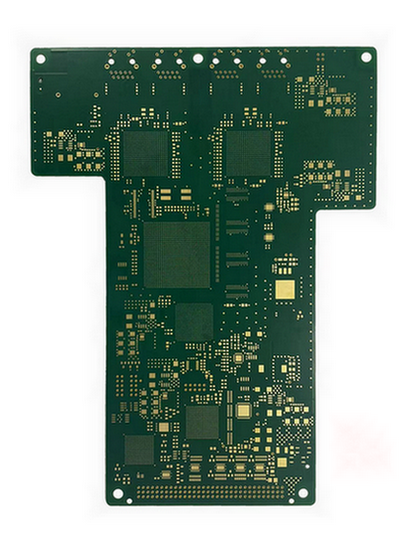
Few industries illustrate the importance of compact performance better than
mobile electronics. Smartphones and tablets are expected to perform at levels
comparable to full-sized computers, yet they must fit in the palm of a hand.
This balance of form and function relies heavily on the design of the circuit
board inside.
HDI PCBs enable manufacturers to stack more layers of circuitry while
minimizing board area. Technologies such as microvias, blind and buried vias,
and high-density interconnects allow for tight packaging of components without
sacrificing electrical performance. The result is a platform that supports
high-speed processors, dense memory modules, multiple antennas, and power
management systems—all within a few millimeters of space.
More importantly, the HDI layout ensures that signal paths are short and
well-isolated, reducing electromagnetic interference and supporting high-speed
data transfer. In devices where every millisecond counts, this translates to
faster response times and smoother user experiences.
To illustrate how HDI enables performance at scale, consider the diagram
below:
| Feature | Traditional PCB | HDI PCB |
|---|---|---|
| Minimum Line Width | ~100 µm | ~50 µm |
| Via Size | >0.3 mm | <0.1 mm (laser) |
| Layer Count (avg.) | 4–6 | 6–12+ |
| Space Efficiency | Moderate | High |
| Signal Integrity | Moderate | High |
In mobile environments, where product cycles are short and competition fierce, HDI PCBs offer a decisive edge. Manufacturers can refresh designs rapidly, integrate new features, and still maintain sleek, durable enclosures that users expect.
If mobile devices are the end-users of connectivity, 5G infrastructure is the backbone. Network routers, baseband units, small cells, and repeaters all depend on high-frequency, high-bandwidth communication, which places extreme demands on the PCB architecture at the core of these systems.
HDI PCBs step in to provide the signal stability and routing complexity required for 5G transmission. Because 5G networks operate at frequencies up to 100 GHz, maintaining signal clarity through multiple paths becomes challenging. HDI technology solves this by supporting shorter interconnect lengths, impedance-controlled traces, and fine pitch ball grid arrays (BGAs), all of which are crucial for managing signal propagation and reducing latency.
Additionally, thermal management is a growing concern. High data rates generate significant heat, and HDI PCBs often incorporate copper-filled microvias or thermal vias to dissipate it efficiently. This prevents hotspots and supports stable operation even under constant data load.
In high-density macro cells and millimeter-wave antennas, HDI boards allow for tight integration of RF modules, logic processors, and shielding layers. These complex builds are impossible without multilayer high-density routing. Furthermore, many 5G components must comply with strict form factor constraints, especially when integrated into urban environments. Once again, HDI boards offer the flexibility to route around physical obstacles without adding bulk.
By enabling reliable signal transmission and compact integration, HDI PCBs support the continued deployment and scaling of next-generation networks, paving the way for broader adoption of smart infrastructure.
While mobile and telecom devices push limits on performance, the automotive industry adds a different kind of complexity: durability. In cars, electronics must endure heat, vibration, and long operating hours—all while delivering precision and speed. Whether it’s for engine control units (ECUs), infotainment systems, rear-view cameras, or advanced driver-assistance systems (ADAS), HDI PCBs play a central role.

These boards allow engineers to integrate various sensors, microcontrollers, power units, and memory chips into a single compact unit. Thanks to stacked vias and high aspect ratio routing, HDI PCBs provide the level of circuit density necessary to reduce weight and footprint—critical in automotive design, where space is limited and weight affects fuel efficiency.
For example, in ADAS systems, real-time data from radar, lidar, cameras, and ultrasonic sensors must be processed with minimal delay. HDI PCBs enable fast communication between processors and memory banks while also supporting reliable isolation between analog and digital signal paths. This is key to minimizing interference and avoiding latency-related hazards.
Another growing application is electric vehicle battery management systems (BMS). These systems rely on HDI boards to monitor voltage, current, and temperature across multiple cells. With HDI’s ability to route complex circuits in compact areas, automakers can fit robust monitoring into the battery enclosure itself—saving space and enhancing safety.
Despite the challenging environment inside a vehicle, HDI PCBs have proven to be a reliable solution. With proper material selection and thermal management techniques, these boards meet the stringent requirements of modern automotive platforms.
Electronics in healthcare have steadily moved from large, stationary systems to compact, wearable, and even implantable solutions. This shift demands PCBs that are not only small and powerful but also exceptionally reliable. HDI PCBs enable this transformation by supporting high circuit density in a small footprint, allowing designers to embed complex functionality into lightweight, portable devices.
Consider a wearable ECG monitor. It needs to sample biological signals, filter noise, store data, and communicate wirelessly with a smartphone or cloud platform. Each of these functions requires components like amplifiers, microcontrollers, memory, and RF chips. With HDI layout, all these parts can fit into a thin, flexible PCB that remains comfortable for the user.

In imaging equipment such as portable ultrasound or handheld diagnostic scanners, HDI boards accommodate high-speed processors and analog-to-digital converters in close proximity, ensuring fast image rendering and accurate readings. For implantable devices like pacemakers, the reliability stakes are even higher. HDI PCBs support redundant routing and fail-safe paths that enhance device dependability over long-term use.
Medical equipment also places high importance on traceability and cleanliness. HDI boards are often manufactured with medical-grade laminates that resist moisture and sterilization chemicals. This ensures device performance is not compromised over time, even under repeated use.
Ultimately, HDI PCB technology makes it possible to shrink advanced medical capabilities into compact tools that empower both patients and providers.
In the aerospace and defense sectors, PCBs operate under some of the harshest conditions imaginable—extreme temperatures, radiation exposure, mechanical shock, and electronic warfare interference. In such environments, failure is not an option. HDI PCBs, with their compact design and high interconnect reliability, are frequently chosen for applications ranging from satellites and drones to radar systems and missile guidance.
These applications require not just performance but also precision. For instance, radar systems demand phase-stable signals with minimal distortion. HDI boards provide fine routing control and layer consistency that help maintain signal integrity over long distances and in complex signal chains.
In space-bound systems, weight is a critical concern. Every gram counts when launching a satellite, so engineers rely on HDI PCBs to reduce the overall size and weight of subsystems without sacrificing functionality. Furthermore, because maintenance is impossible once the system is deployed, these boards must offer long-term reliability. HDI’s robust via structures and controlled impedance pathways help ensure durability over extended missions.
Military-grade electronics often feature redundant circuits for fail-safe operation. HDI PCB technology supports these redundant paths within a compact form, making it possible to meet rigorous MIL-STD qualifications without bulky designs.
In addition to their technical advantages, HDI PCBs support modular design strategies that simplify repair and upgrade cycles. This is especially valuable in long-lifecycle programs such as fighter aircraft, where systems may need updating over decades without redesigning the entire platform.
Whether mounted on a fighter jet, inside a command center, or orbiting the Earth, HDI PCBs prove their worth through sheer reliability and performance.
From handheld electronics to aerospace systems, HDI PCBs are the invisible
framework powering modern innovation. Their ability to support high signal
integrity, compact routing, and multi-functional integration makes them
indispensable across sectors where performance and precision are paramount. For
companies in search of high-quality multilayer HDI PCBs tailored to demanding
applications, VictoryPCB offers robust manufacturing expertise and a proven
track record of delivering best quality PCB solutions that meet the highest
standards of reliability and performance.
Reach us at [email protected] or visit /